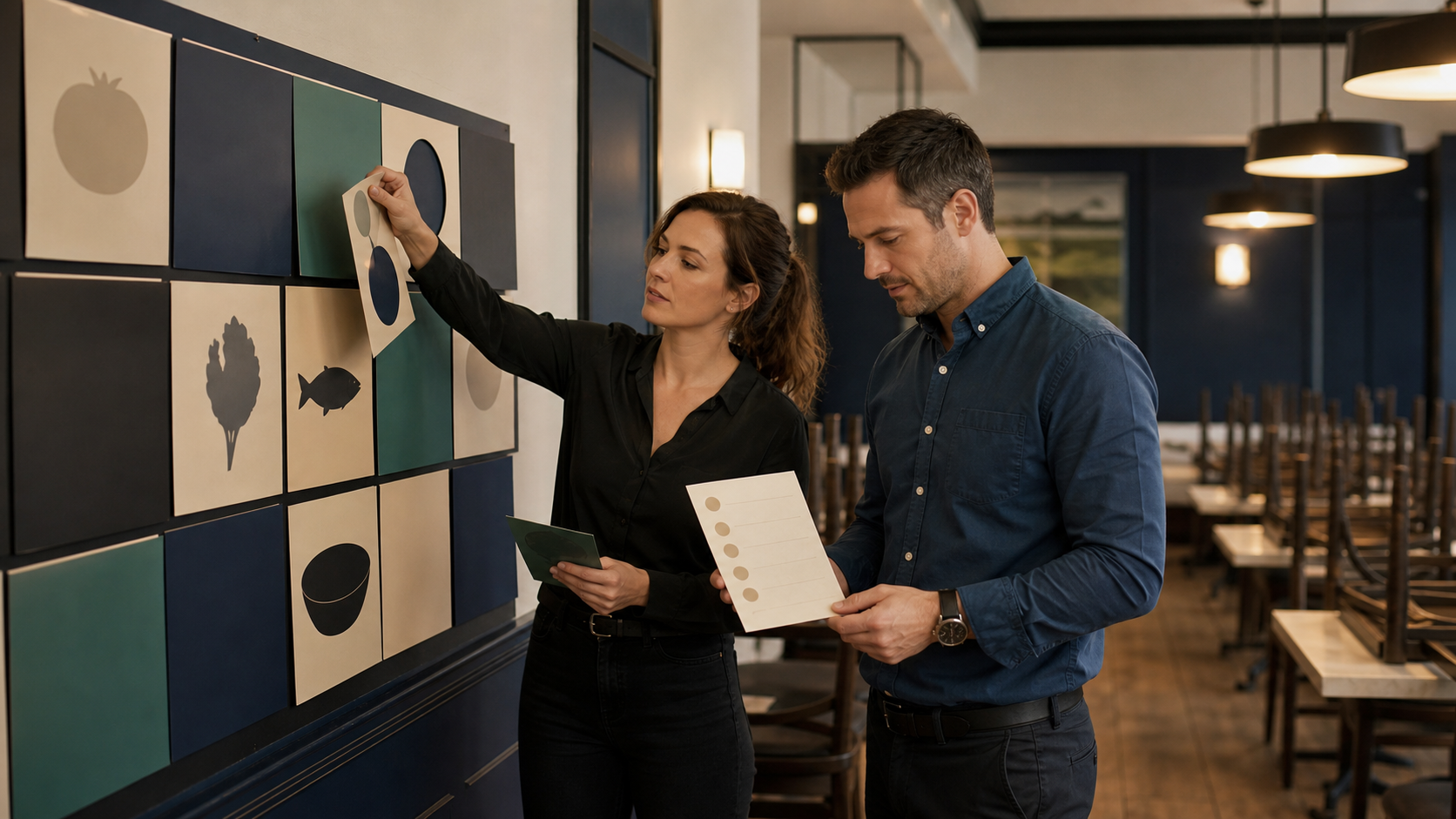
More messages do not create more demand
A recent National Restaurant Association analysis describes uneven traffic and sales growth that is partly price-driven. The Bureau of Economic Analysis' July income and outlays release separates current-dollar spending from real spending, while an August Associated Press inflation report shows why household pressure can persist even when one monthly measure improves.
Those sources describe broad conditions, not one restaurant's traffic. The practical implication is to make the board easier to choose from before filling it with another badge, bundle, or animation. This focus test is an original editorial framework, not a universal conversion benchmark.
Keep the approved menu source and location context together through the ServingIntel Genesis platform.
Build the decision inventory
List every category, item, modifier cue, price, image, badge, disclaimer, and promotion shown during the target daypart. For each element, record its intended guest decision. If two elements are trying to produce the same decision, identify which one is clearer. If an element has no decision attached, it is a candidate for removal.
Use ServingIntel News & Insights for external operating context, but let location evidence decide what stays on screen.
Run the four-part focus test
- Findability: Can a guest locate the entry price, signature item, and dietary path without scanning the whole screen?
- Comparability: Are size, portion, included items, and price relationships obvious enough to compare?
- Deliverability: Can the kitchen and service team reliably produce every emphasized choice in the target period?
- Measurability: Can the team tell whether the change affected mix, transaction time, stockouts, or exceptions?
Before judging results, confirm the direct-order menu with the POS Websites checkout price proof and verify the physical endpoints with the POS Digital Display incident handoff.
Create a subtraction queue
- Remove expired, unavailable, or unsupported messages first.
- Combine duplicate value claims into one specific comparison.
- Move secondary detail to the ordering step where it is needed.
- Reduce simultaneous emphasis; one screen should not have five “most important” items.
- Preserve required prices, disclosures, and accessibility cues.
Review fleet constraints and screen placement through ServingIntel hardware planning.
Test one daypart for seven comparable days
Freeze the baseline, change only the agreed content set, and record transactions, item mix, decision time where measurable, stockouts, voids, substitutions, and guest questions. Compare like-for-like periods and keep a rollback copy ready. Do not call a result successful if the board looks cleaner but sends more exceptions to staff.
Connect the test owner, evidence, and follow-up through ServingIntel solutions.
The bottom line: when traffic is uneven, the menu board should make the next choice easier—not ask the guest to process more marketing. Subtract first, test one hypothesis, and add only what earns its place.